The True Cost of Car Ownership

What Drivers Really Pay After the Purchase Price

AUGUST 2026 EDITION

Beyond the Sticker

The Illusion of a Clean Number

Car shoppers love a clean number. A window sticker. A monthly payment. A tidy online listing that looks manageable after a few optimistic clicks. Then real life barges in wearing steel-toe boots: insurance renewals, registration fees, tires, fuel, interest, repairs, and the quiet financial erosion called depreciation.

The true cost of car ownership is rarely one dramatic expense. It is a stack of smaller obligations, some predictable and some maddeningly random, that determine whether a vehicle is a smart purchase or a slow leak in the household budget. AAA has estimated that owning and operating a new vehicle driven 15,000 miles a year now costs well above $12,000 annually when depreciation, finance charges, fuel, insurance, maintenance, license, registration, and taxes are included. That is more than $1,000 a month before a driver buys coffee at the gas station.

"The advertised price is only the first chapter."

For automotive retail professionals, this is no longer a side conversation. It is the conversation. Consumers are increasingly comparison-shopping across dealer websites, marketplaces, credit unions, insurers, and direct-to-consumer retail platforms. They know the advertised price is only the first chapter. The retailers that help buyers understand the whole ledger earn trust faster. The ones that dodge the math invite suspicion.

Dealer Math & the Real Receipt

The Out the Door Price Car in USA Buyers Actually Pay

In the showroom, the first serious number is not the advertised price. It is the out-the-door figure: selling price, sales tax, title, registration, documentation fee, lender charges where applicable, inspection, emissions compliance, and any dealer-installed accessories that made it onto the buyer's order. For anyone buying in the USA, those line items can swing wildly by state and even by county.

That difference matters because two identical vehicles can carry very different final costs. A buyer in Oregon faces no statewide sales tax, while a buyer in California may see state, county, city, and district taxes stacked together. Florida doc fees are often far higher than those in states that cap them tightly. Illinois, Texas, Arizona, Georgia, New York — each jurisdiction writes its own version of the final receipt. Ask for an out the door price car in USA retailing, and you are really asking for a location-specific financial disclosure. When shopping for Used cars in GA, request a location-specific out-the-door breakdown.

A clean ownership forecast starts with the purchase structure. Cash buyers avoid finance charges but still absorb taxes and depreciation. Financed buyers need to watch annual percentage rate, term length, loan-to-value ratio, and negative equity from a trade-in. A 72-month loan can make a $42,000 SUV feel attainable, then keep the owner underwater for years. That is not a moral failure. It is arithmetic. When comparing Used SUVs, weigh the loan terms alongside the asking price.

  • Sales tax and registration: Often hundreds to several thousand dollars, depending on state, county, vehicle value, and weight class.
  • Documentation and processing fees: A legitimate administrative charge in many stores, but shoppers should know whether state law caps it.
  • Inspection or emissions costs: Especially relevant in states with smog, safety, or county-level emissions requirements.
  • Dealer add-ons: Window tint, nitrogen, paint protection, wheel locks, theft recovery products, service contracts, and prepaid maintenance plans can be useful or wildly overpriced. The difference is disclosure.

Online retail has sharpened this issue. When a customer completes an online car purchase delivered to a driveway in Ohio, Nevada, or North Carolina, the platform still has to solve local tax, title, registration, lien perfection, and state delivery requirements. VirtualCarHub.com, for example, frames online buying around the full delivered cost rather than treating delivery and paperwork as afterthoughts. That is where digital retail either becomes convenient or collapses into call-center confusion.

The Financing Trap Hiding Behind a Friendly Payment

Monthly payment selling is not going away. It works because households budget monthly. Still, a payment without total finance cost is a dangerous half-truth. A buyer who stretches a loan from 60 to 84 months may lower the monthly obligation by a few hundred dollars while paying thousands more in interest and facing a higher risk of negative equity when trade-in fever arrives early. Our deep dive on what your monthly payment doesn't show unpacks this trap in detail.

"In a high-rate environment, the price of money becomes part of the price of the car."

Interest rates have made this pain more visible. After the Federal Reserve's rate hikes, new and used auto loan APRs climbed materially compared with the cheap-money years of 2020 and 2021. Subprime borrowers took the hardest hit, but even prime customers noticed. In a high-rate environment, the price of money becomes part of the price of the car. Ignore it, and the budget gets ambushed.

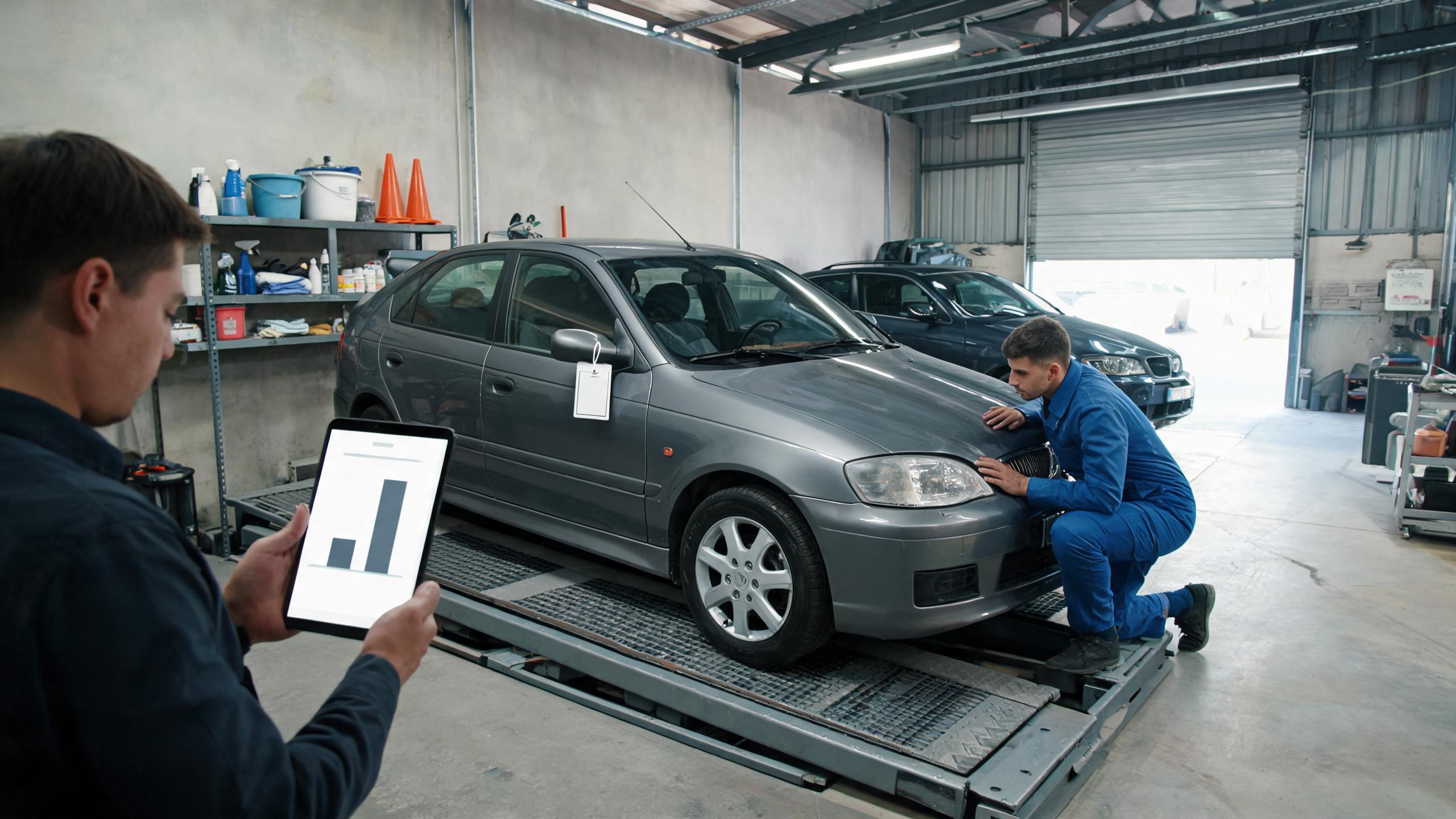
Appraiser and technician inspecting a used car to explain wholesale vs retail car pricing and the difference between auction price vs retail car price.

Insurance, Fuel & Regional Costs That Change the Equation

Insurance used to be the boring line item customers checked after selecting a vehicle. Not anymore. The U.S. Bureau of Labor Statistics auto insurance index rose more than 20% year over year during parts of 2024, a surge fueled by expensive collision repairs, more sophisticated sensors, litigation costs, vehicle theft patterns, and higher medical claim severity. Full-coverage premiums commonly exceed $2,000 a year, and in high-cost states they can climb far above that.

Regional variation is brutal. Michigan's no-fault legacy still influences premiums even after reforms. Florida drivers deal with dense traffic, severe weather, fraud concerns, and a costly claims environment. Louisiana has long struggled with high auto insurance costs tied partly to litigation and accident severity. Rural states can be cheaper, but a driver with a long commute, limited repair options, or poor credit-based insurance score may still pay heavily. In the USA, insurance is regulated state by state, so a national average can mislead more than it helps.

Fuel adds another layer of unpredictability. A truck that looks affordable on a dealer lot can become costly when the owner drives 18,000 miles a year at 17 miles per gallon. If gasoline averages $3.60 per gallon, that is roughly $3,812 a year just to keep it moving. A compact hybrid getting 48 mpg on the same mileage would burn about $1,350. Same commute. Very different physics. Estimate annual fuel spending for Used Trucks using your expected mileage.

No single fuel estimate fits the USA because driving behavior and energy prices are intensely local. California pump prices can sit far above the national average due to taxes, refining rules, fuel formulation requirements, and supply constraints. Texas drivers may enjoy lower fuel costs but drive longer distances. Mountain states punish brakes and transmissions. Northern states punish batteries, tires, and undercarriages with cold starts and road salt.

Electric vehicles complicate the picture in a good way and a bad way. Home charging can slash energy costs compared with gasoline, especially for drivers with off-peak utility rates. Public fast charging can be much pricier. Some states also levy extra EV registration fees to offset lost fuel-tax revenue. Battery warranties, tire wear from heavy curb weight, charging access, and depreciation patterns need to be part of the ownership conversation, not footnotes. If you're weighing options, our guide on how American buyers should choose the right powertrain is a smart place to start.

The Same Commute, Different Physics

A truck at 17 mpg over 18,000 miles at $3.60/gallon runs roughly $3,812 a year in fuel. A 48-mpg compact hybrid on the identical mileage burns about $1,350. That is a $2,462 annual gap hiding inside a decision that looked identical on the lot.

Why Insurance Quotes Belong Before the Test Drive

Best practice for dealers and consumers is simple: price insurance before signing. A 24-year-old buyer cross-shopping a used Mustang GT against a midsize sedan may find that the insurance delta destroys the apparent bargain. The same applies to luxury vehicles with aluminum body panels, advanced driver-assistance sensors, adaptive headlights, and calibration-heavy windshields. A cracked windshield is no longer just glass. Sometimes it is a software event. Include Used Sedans in your comparison and get insurance quotes before signing.

Wholesale, Maintenance & the Silent Heavyweight

Wholesale vs Retail Car Pricing

Shoppers often discover wholesale vs retail car pricing during the trade-in process, usually with irritation. They see similar models listed online for $26,995 and wonder why their trade offer is $20,500. The missing pieces are reconditioning, transport, auction fees, title risk, retail margin, warranty exposure, financing overhead, advertising, staff, flooring cost, and the uncomfortable truth that listed prices are asking prices, not guaranteed closing prices.

The auction price vs retail car price spread is especially misunderstood. A dealer may buy a three-year-old crossover at auction, pay buyer fees, ship it 600 miles, replace tires, service brakes, fix a paint blemish, detail it, photograph it, advertise it, and still need margin for the business to survive. That does not excuse opaque pricing. It explains the economic bridge between wholesale acquisition and a retail-ready unit. If you're deciding how to move your current car, our breakdown of trade-in vs. private sale shows what depreciation has already cost you.

A related phrase causes even more confusion: dealer invoice price used car. Strictly speaking, used vehicles do not have a factory invoice in the same way new vehicles do. A used vehicle has an acquisition cost, which might come from trade appraisal, auction hammer price, lease return grounding, rental fleet purchase, or dealer-to-dealer transaction. Retailers should be precise here. Sloppy language breeds mistrust.

Maintenance is the ownership cost that polite budgets underestimate. Oil changes are easy. Everything else arrives with worse timing: tires at 38,000 miles, brake pads before a winter trip, a 12-volt battery after the first cold snap, spark plugs, transmission service, wheel alignment, wiper blades, cabin filters, coolant, belts, sensors, suspension components. Then there are model-specific gremlins. A luxury German SUV and a mainstream compact crossover do not inhabit the same repair universe.

Tires deserve their own uncomfortable paragraph. Many late-model crossovers, EVs, pickups, and performance sedans use larger wheels and specialized rubber. A set can run $800 to $1,600 before alignment, road hazard coverage, or wheel repair. Heavy EVs and torque-rich trucks can chew through tires faster than owners expect. It is not glamorous. It is costly.

"Depreciation does not send a monthly bill, so owners ignore it until trade-in day. Then it bites."

Depreciation, though, is the silent heavyweight. New vehicles often lose 15% to 25% of their value in the first year, depending on brand, incentives, mileage, market demand, and macroeconomic conditions. Some trucks, hybrids, and scarce specialty models hold value unusually well. Certain luxury sedans fall like a dropped wrench. Depreciation does not send a monthly bill, so owners ignore it until trade-in day. Then it bites.

  • High depreciation risk: Luxury sedans, niche EVs with volatile incentives, vehicles with weak reliability reputations, and models replaced by a redesigned generation.
  • Lower depreciation risk: Popular body-on-frame trucks, certain hybrids, durable compact SUVs, and vehicles with strong certified pre-owned demand.
  • Maintenance wild cards: Turbocharged engines, continuously variable transmissions, air suspensions, low-profile tires, panoramic roofs, and advanced driver-assistance systems.

For dealerships, the standard should be a total-cost conversation anchored in data: market days' supply, residual value guides, reconditioning notes, inspection results, service history, and realistic ownership use. For consumers, the standard is less romantic but more useful. Do the math before falling in love with the color.

From Sticker Shock to Ownership Clarity

Retailers that explain the full ownership arc reduce friction in the sales process. They also protect gross profit more intelligently. If a customer understands why a certified pre-owned hybrid costs more upfront but saves on fuel, carries a better warranty, and depreciates more gently, the conversation shifts from haggling to value. That is a better room to sell in.

VirtualCarHub.com approaches this from the digital side by making delivered pricing, vehicle history, financing considerations, and ownership trade-offs easier to compare before the buyer commits to a specific unit. The real advantage is not simply convenience. It is confidence. A shopper who sees the total picture is less likely to abandon the transaction when tax, title, insurance, or delivery costs appear late.

A $31,900 Vehicle That Isn't

Consider a midsize SUV advertised at $31,900. After tax, registration, dealer fee, and financed service products, the out-the-door figure may land near $35,000. Add full-coverage insurance at $2,200 a year, fuel at $2,400, maintenance and tires at $900, interest at several thousand dollars over the loan, and depreciation that could average $3,000 to $5,000 annually in the early years. Suddenly the vehicle is not a $31,900 decision. It is a six-figure ownership commitment over five years.

The fix is not to scare people away from buying cars. Americans need vehicles for work, school, healthcare, childcare, and daily autonomy, especially outside dense transit markets. The fix is to stop pretending the sticker is the story. It is the headline, maybe. The article is longer.

For dealers, a sharper playbook is emerging. Publish transparent out-the-door estimates where legally and technically feasible. Train sales staff to explain tax and fee variance without sounding defensive. Encourage insurance pre-quotes. Merchandise service records and reconditioning work. Compare fuel economy in annual dollars, not just miles per gallon. Show estimated depreciation ranges when discussing late-model used versus new. And when selling protection products, tie them to actual owner risk rather than canned menu scripts.

A Practical Ownership Checklist

For shoppers, the most useful pre-purchase exercise fits on one page. It will not feel as thrilling as a test drive. Good. Thrill is expensive when it goes unexamined.

  1. Get the true out-the-door number, including tax, title, registration, doc fee, delivery, accessories, and lender charges.
  2. Quote insurance using the exact VIN when possible, not just the year, make, and model.
  3. Estimate annual fuel or charging cost from real mileage, local energy prices, and expected driving patterns.
  4. Check maintenance schedules, tire size, warranty status, open recalls, and common repair issues.
  5. Compare depreciation using reputable valuation guides and recent retail listings in your region.
  6. Calculate total loan interest over the full term, then decide whether the payment still looks attractive.
  7. Budget for unpleasant surprises. A $1,000 reserve is not pessimism. It is adulthood.

Total cost of ownership has become the defining affordability metric in automotive retail. Purchase price still matters, of course. Negotiation still matters. So do wholesale signals, auction trends, incentives, invoice terminology, and retail margins. But the buyer who wins is not always the one who gets the lowest selling price. The winner is the one who can own, insure, fuel, maintain, and eventually sell the vehicle without financial regret.

Browse current inventory

Frequently asked questions

What costs should I budget for beyond the purchase price?

Ownership costs include depreciation, finance charges, fuel, insurance, maintenance, license, registration, and taxes. The purchase itself can also involve documentation fees, lender charges, inspection, emissions compliance, and dealer-installed accessories.

What does an out-the-door price include?

It includes the selling price, sales tax, title, registration, documentation fee, applicable lender charges, inspection, emissions compliance, and dealer-installed accessories on the buyer's order. These costs vary by state and sometimes by county.

Why should I get an insurance quote before choosing a car?

Insurance costs can erase an apparent bargain when comparing vehicles. Expensive collision repairs, sophisticated sensors, theft patterns, and regional claims conditions can affect premiums, so the article recommends pricing insurance before signing.

How much can fuel economy change my annual costs?

The article estimates that driving 18,000 miles annually in a truck getting 17 mpg costs roughly $3,812 when gasoline averages $3.60 per gallon. A compact hybrid getting 48 mpg would use about $1,350 in fuel over the same mileage.

Do used cars have a dealer invoice price?

Used vehicles do not have a factory invoice in the same way new vehicles do. They have an acquisition cost, which may come from a trade appraisal, auction purchase, lease return, rental fleet purchase, or dealer-to-dealer transaction.

Related Articles