VirtualCarHub and the End of the Inefficiency Tax

How One Company Is Eliminating the Hidden Costs of Traditional Car Buying

AUTOMOTIVE INNOVATION • WINTER 2024

The first time I walked a dealer lot at dawn, the place felt like a museum of frozen cash. Hundreds of cars sitting quiet under sodium lights, each one a monthly payment to some bank, each one waiting for the right buyer or the wrong move. A sales manager smoked near the service bay and said the quiet part out loud: "We don't sell cars; we sell time." Because time is what inventory burns. And buyers—unknowingly—pay for the match.

VirtualCarHub began with a blunt diagnosis: the price of a car has been swollen by a structural inefficiency tax. Acres of asphalt, glass towers and vending machines, bloated overhead, inventory speculation—every bit of it tucked into the final number a customer signs. If you've ever felt the fatigue of an eight-hour "quick visit," you've felt the tax in your bones. That's not an accident. That's the system doing exactly what it was built to do.

"We don't sell cars; we sell time. Because time is what inventory burns."

The story that follows isn't a sales pitch. It's an origin story. How a team looked at the dealership machine—its debt, its real estate, its ritual—and turned the engine around. Lean, almost annoyingly simple once you see it. The kind of model that, once it clicks, makes the old one look medieval.

The Broken System

Paying for Parking Lots You Don't Need

Start with the obvious, the part everyone can see: massive dealer lots, 500 to 1,000 vehicles per location, financed at 4% to 8% annually. Those sparkling foyers, the glass towers, the rows of LED-lit SUVs—pretty, sure, but they function like billboards for a capital structure. The average new car store carries about $8.2 million in financed inventory. Used lots often sit on vehicles for 45 to 60 days, bleeding floorplan interest with every sunrise.

Walk the numbers. At 6%, that $8.2 million burns roughly $492,000 a year just to sit still. Add lot maintenance, property tax, security, insurance, and the legion of people whose job is managing inventory rather than serving a specific buyer. The tally per car can add $2,000 to $3,000. Buyers don't see a line item called inefficiency tax on paperwork. They see "doc fee," "market adjustment," "protection package." Same wallet, different labels.

Now zoom out. The traditional lot isn't a retail store; it's a hedge. Dealers speculate on what might sell in 30, 45, 60 days. They lock cash (or borrowed cash) into metal, then fight depreciation with pricing tricks and promotions. Sales cycles stretch. Negotiations turn into theater. The real customer in that model isn't always you—it's the finance company underwriting the float.

The Real Business Model

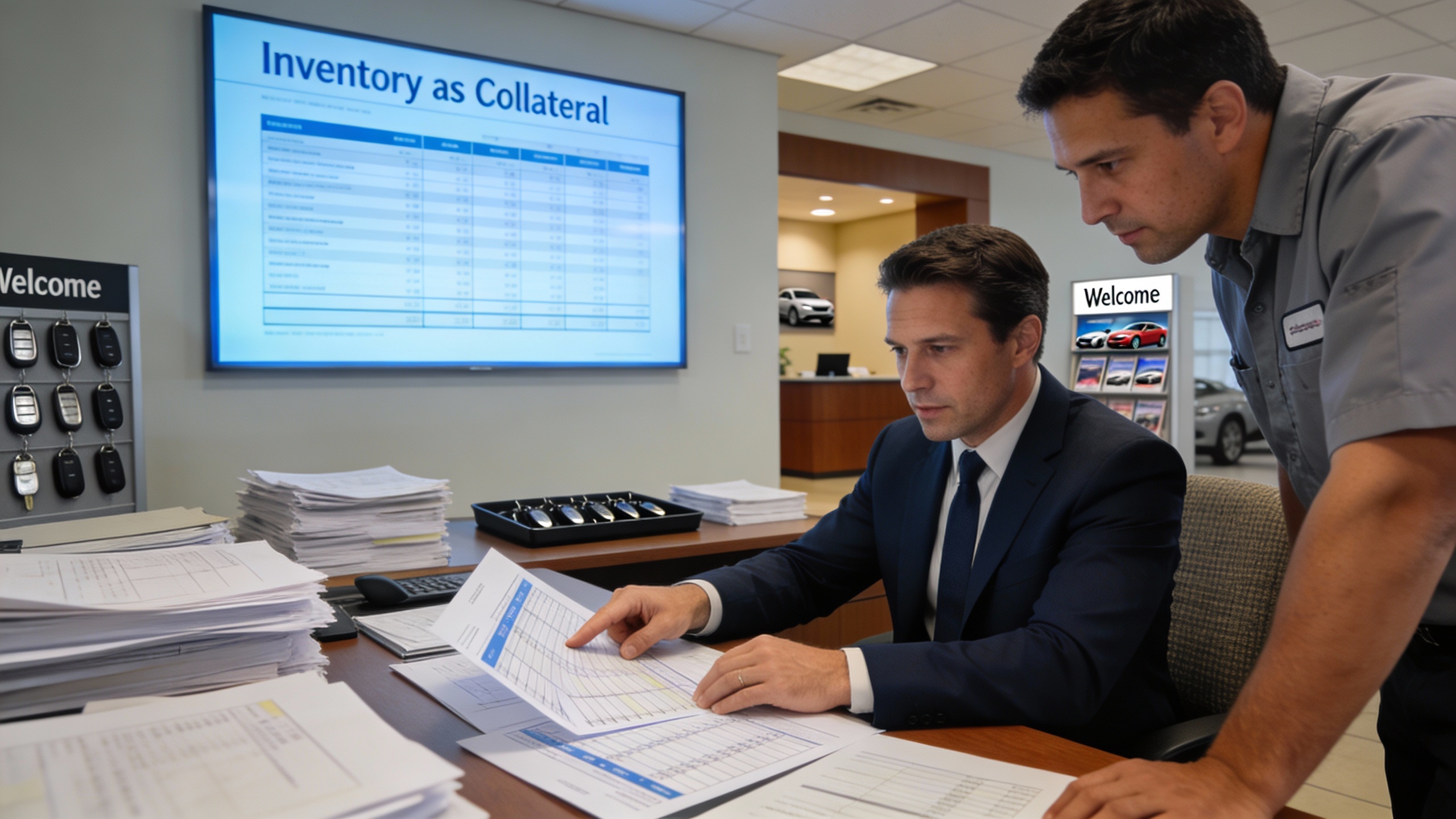
Modern dealerships are inventory-financing and real-estate businesses wearing the clothes of retail. The cars are collateral. The lots are billboards for balance sheets. The friction you feel is the sound of risk being priced into a transaction that pretends to be simple.

And that's the rot at the core. A dealership looks like a place that moves cars. In truth, it moves money—expensively. The machine is optimized for inventory velocity, not buyer clarity. So when you overpay, you're subsidizing a guessing game you didn't ask to join.

Dealership finance team reviewing inventory and balance-sheet charts, conveying that traditional dealers function as finance and real-estate businesses rather than car companies

The Insight

Dealerships Aren't Car Companies

Here's the click moment—the insight that changed the trajectory of VirtualCarHub. Modern dealerships are inventory-financing and real-estate businesses wearing the clothes of retail. The cars are collateral. The lots are billboards for balance sheets. The friction you feel is the sound of risk being priced into a transaction that pretends to be simple.

Inventory is the root cause of the premium. Holding thousands of vehicles demands capital. Capital demands interest. Interest demands margin. Margin makes pricing opaque. Opaqueness invites gamesmanship. And the spiral continues, right into your monthly payment.

"What if you never hold inventory in the first place?"

So the team asked a heretical question that should've been obvious: what if you never hold inventory in the first place? What if you're not a real-estate enterprise at all? What if the business is a matching market—a marketplace that brings a real buyer to a real car at a real price, then gets out of the way?

Lean manufacturing has preached this for decades: build to demand. Fintech refined it: deploy capital after demand is confirmed. Combine the two, and the blueprint appears. A dealership without a lot. A buying experience without the inefficiency tax.

The Inversion: Demand First, Asset Second

VirtualCarHub didn't add features; it reversed the order of operations. Traditional flow: buy inventory, finance it, hope buyers show up, negotiate, sell, recover carrying costs. VirtualCarHub's flow: find a real buyer, match to a real vehicle, secure funding, purchase once demand is confirmed, and deliver. No speculative pile of cars aging by the day. No floorplan interest ticking like a metronome.

Imagine arriving not at a lot but at a lens. You describe your budget, needs, quirks—two car seats, a long commute, a stubborn love for manual transmissions. The system translates that into a search not across a single yard, but across wholesale networks, auctions, private sources, and partner inventories. The world becomes your lot, and the clock starts only when the match is real.

Funding moves in lockstep. Because the buyer is known and the vehicle is identified, capital can be lined up without the waste of "maybe." Money is deployed for days, not months. The car is purchased post-commitment, not pre-hope. That shaves cost, risk, and drama in one stroke.

Call it a just-in-time dealership. Inspired by lean manufacturing and modern fintech discipline, built for people who don't want theater—just a fair deal, delivered quickly.

Mia's Story: How the Model Works

Picture Mia, an engineer with a sharp eye for numbers and a low tolerance for nonsense. She wants a three-year-old hybrid hatchback, accident-free, under 40,000 miles, with adaptive cruise because Los Angeles traffic is a slow-motion endurance sport. She tries the usual suspects—CarMax, Carvana—scrolls through endless lists, lots of almost-right, too many add-ons. She's buying off a shelf designed to sell what's in stock, not what she actually needs.

She lands on VirtualCarHub on a Sunday afternoon. By Tuesday, Mia has three candidates sourced from wholesale channels—vehicles she'd never see parked in front-row retail. Transparent acquisition costs, modest service records, VIN-level data, delivery windows measured in days. She picks the middle option, the boring one with perfect maintenance notes. Sensible wins.

Engineer Mia reviewing a VirtualCarHub listing for an undervalued used car, illustrating a consumer-focused wholesale car buying for consumers experience

Why It Wins: Architecture Beats Feature Lists

There's a reason this model outruns the giants. Start with cost structure. Traditional dealers and the new-school glass towers are shackled to overhead. Inventory storage, depreciation hits, staffing to move iron, interest on capital idling in the sun—these are structural. VirtualCarHub has none of that. The company can consistently surface wholesale priced used cars without playing retail theater because there's no speculative loss to recoup.

Capital efficiency changes the tempo. When your cycle time collapses from 45–60 days to, say, five to eight, each dollar works harder. The business scales in a way incumbents can't match without rewriting their DNA. At the same time, buyers benefit immediately. Lower structural costs become lower out-the-door prices. Not always the cheapest, but reliably the best deals on used cars online relative to condition, provenance, and timing.

"Architecture beats feature lists every time."

Why Incumbents Can't Copy It

Can the big players pivot? Not easily. Sunk costs bite. Real estate binds. Debt covenants whisper "thou shalt hold inventory." Public-market expectations turn strategy into a cage: show growth in familiar ways, keep the towers humming, don't scare the model that fed you. Even the software stack fights the shift—systems tuned for lot management and reconditioning volume aren't born for just-in-time matching.

Legacy operators face a brutal choice: cannibalize their own economics or defend the old margins until the market shifts under their feet. Many will rationalize a hybrid—some just-in-time, some traditional—but hybrids carry two cost structures. That's a tax in itself.

VirtualCarHub is natively digital. No sacred real estate, no floorplan obligations, no investor story anchored in "units on the ground." The operating system is match-first. The culture is lean by design. It can do what incumbents can't because it doesn't have to unlearn how to be a landlord.

The Future: Millions of Cars, Zero Lots

Picture a dealership that scales like software. No fence lines, no city-by-city sprawl. A networked catalog of millions of vehicles accessed virtually, where your query pulls from real inventory across the country, not a single store's guess. Fair pricing becomes the default because the architecture won't tolerate games—no hidden inventory cost to disguise, no reason to stall.

Imagine regional micro-hubs for inspections and handoffs, invisible to most customers, humming for logistics rather than show. Picture a capital engine that measures velocity in days, with dollars flipping multiple times a month. Put consumer trust on a flywheel: transparent sourcing, explainable pricing, swift delivery, and support that solves problems without ceremony.

VirtualCarHub isn't merely selling cars. It's erasing a century-old assumption that inventory must be owned before a buyer shows up. When you delete that assumption, a lot disappears with it: overhead, opacity, the waiting game. What remains is cleaner. Faster. More humane.

What Buyers Feel, What Investors See

Buyers feel shorter timelines, cleaner math, less ceremony. Investors see cycle-time compression, negative working-capital drift, and margin held not by markup but by efficiency. Both are tasting the same thing: an architecture with fewer leaks.

And once you've bought a car without subsidizing a field of vehicles you'll never touch, it's very hard to go back. The future rarely announces itself. It just stops wasting your time.
Sponsor Logo

This article was sponsored by Aimee, your 24-7 AI Assistant. Call her now at 888.503.9924 as ask her what AI can do for your business.

About the Author

Joe Machado

Joe Machado is an AI Strategist and Co-Founder of EZWAI, where he helps businesses identify and implement AI-powered solutions that enhance efficiency, improve customer experiences, and drive profitability. A lifelong innovator, Joe has pioneered transformative technologies ranging from the world’s first paperless mortgage processing system to advanced context-aware AI agents. Visit ezwai.com today to get your Free AI Opportunities Survey.