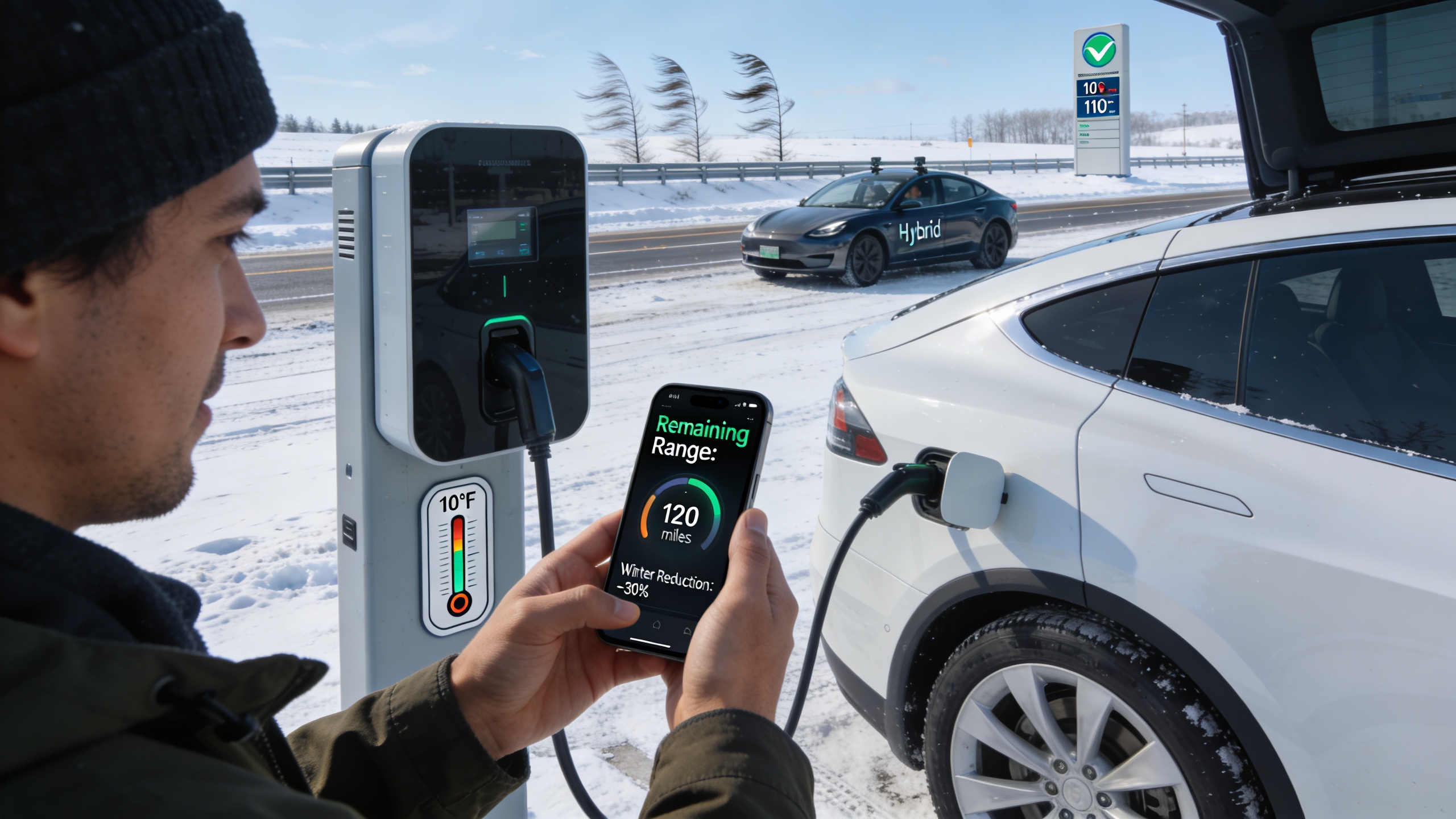
Range isn't a single number; it's a confidence curve. EPA-rated range assumes mixed driving and controlled temps. In winter, cold batteries get cranky and cabin heat is energy-hungry—expect 15–30% range reduction in harsh conditions. At 10°F with a headwind, your real-world buffer shrinks. Hybrids and gas vehicles don't flinch much; you pay at the pump instead of in planning time.
The Charging Infrastructure Reality
Public charging has expanded meaningfully—well over 160,000 public charging ports are now online nationwide, and high-speed DC fast-charging sites continue to spread along interstate corridors. Still, coverage is uneven. California and the Northeast corridor are dense; Mountain West and rural Midwest can feel sparse between towns. If you live in an apartment in Dallas or Miami without dedicated parking, the availability of reliable public fast charging within your daily pattern becomes more than a convenience—it's the deciding factor.
Charging speed matters as much as station count. On a 150 kW charger, a modern EV can recoup 150–200 miles in 15–25 minutes under ideal conditions. But station load, cold batteries, and older chemistries can stretch that stop. If you're hopping between youth tournaments every weekend, those minutes add up. Hybrids fill in four minutes. Gas? Two and you're back on the highway, no app required.
The Smart Compromise
For many households, the smart compromise is a split garage: one EV for commuting and errands, one hybrid or gas vehicle for towing, long-haul vacations, or winter mountain runs. Not everyone can afford two cars, obviously, but if you can, that combination flattens anxiety and maximizes savings.
There's also a reliability story. Station uptime has improved, but mixed networks, payment friction, and broken dispensers remain a sore spot. The industry pivot to a common North American Charging Standard (NACS) plug, along with federal NEVI funding tied to uptime metrics, is fixing this—just not overnight. If you're an early adopter in Seattle, fine. If you're in rural Alabama, write a different playbook: consider a long-range hybrid or a gas model until the local map thickens.
How Car Auction Access Changes the Math
Most buyers compare new-versus-new. Savvier shoppers widen the lens: late-model used vehicles, especially sourced in original condition, can shift the whole equation. When you bypass retail reconditioning and branding, you see the car as it truly is—then decide what's worth fixing and what's just cosmetic noise.
Enter direct car auction access for buyers in the USA, increasingly possible through platforms that work with consumers rather than only dealers. Buying an original condition used car before the dealer touches it can mean thousands saved. Why? Dealer reconditioning markup—windshields, wheel refinishes, paintless dent repair, headlight polish—rolls into the sticker. Many of those items are optional or cheaper at an independent shop.
"Skip the markup, budget $600 with a local specialist, and you've saved enough to cover a year of fuel."